 Japanese
  English
  German
  French
  Spanish
  Dutch
Dutch  Portuguese

1. Material & Texture
Leopard Cowhide Rugs:
These rugs are made from genuine or faux cowhide, with the leopard print either naturally stamped, dyed, or digitally printed onto the hide. Cowhide rugs have a unique texture — smooth, slightly glossy, with short, fine hairs that give a tactile luxury to any room. Because each cowhide is unique, no two rugs are exactly alike, adding authenticity and character.
Regular Leopard Rugs:
These are usually made of synthetic fibers like polyester, polypropylene, or acrylic, or sometimes natural fibers like wool. While these materials can mimic the pattern of leopard print, they lack the natural sheen and irregularity of cowhide. They may feel plush, flat, or tufted depending on construction but don’t offer the distinct natural feel of hide.
2. Visual Impact
Cowhide with Leopard Print:
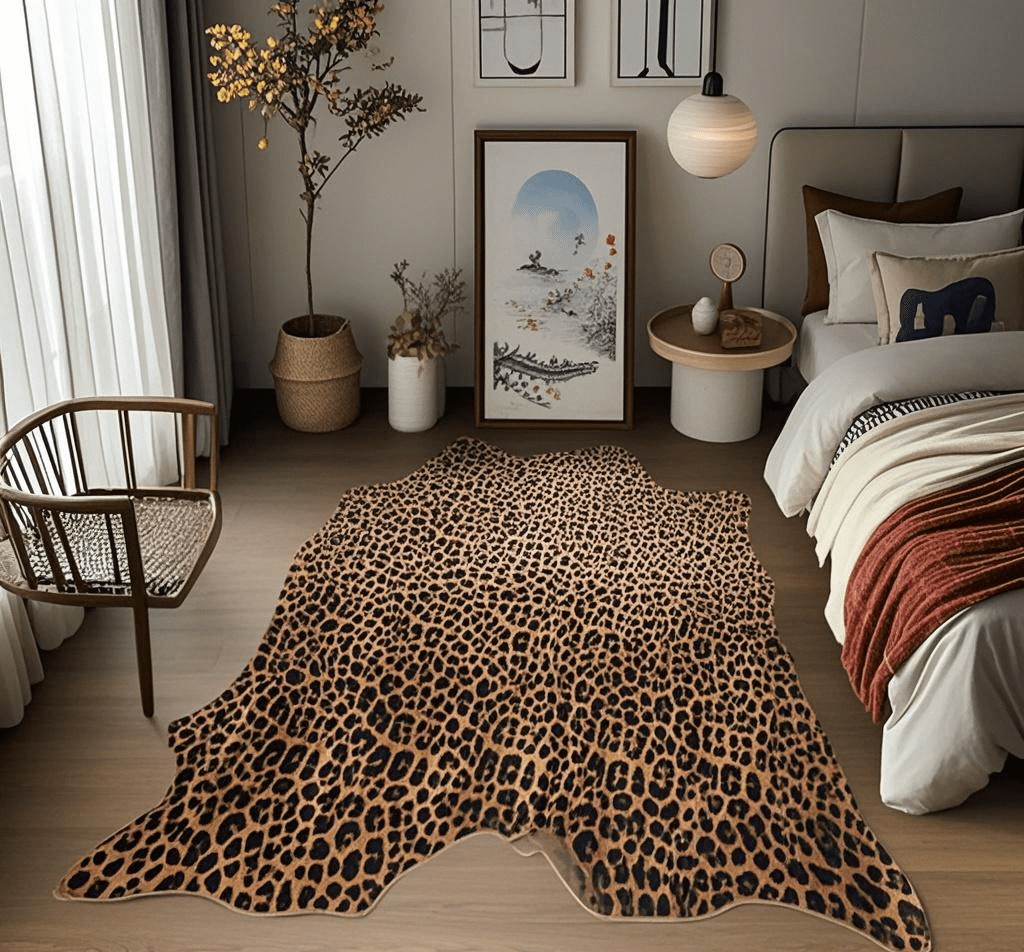
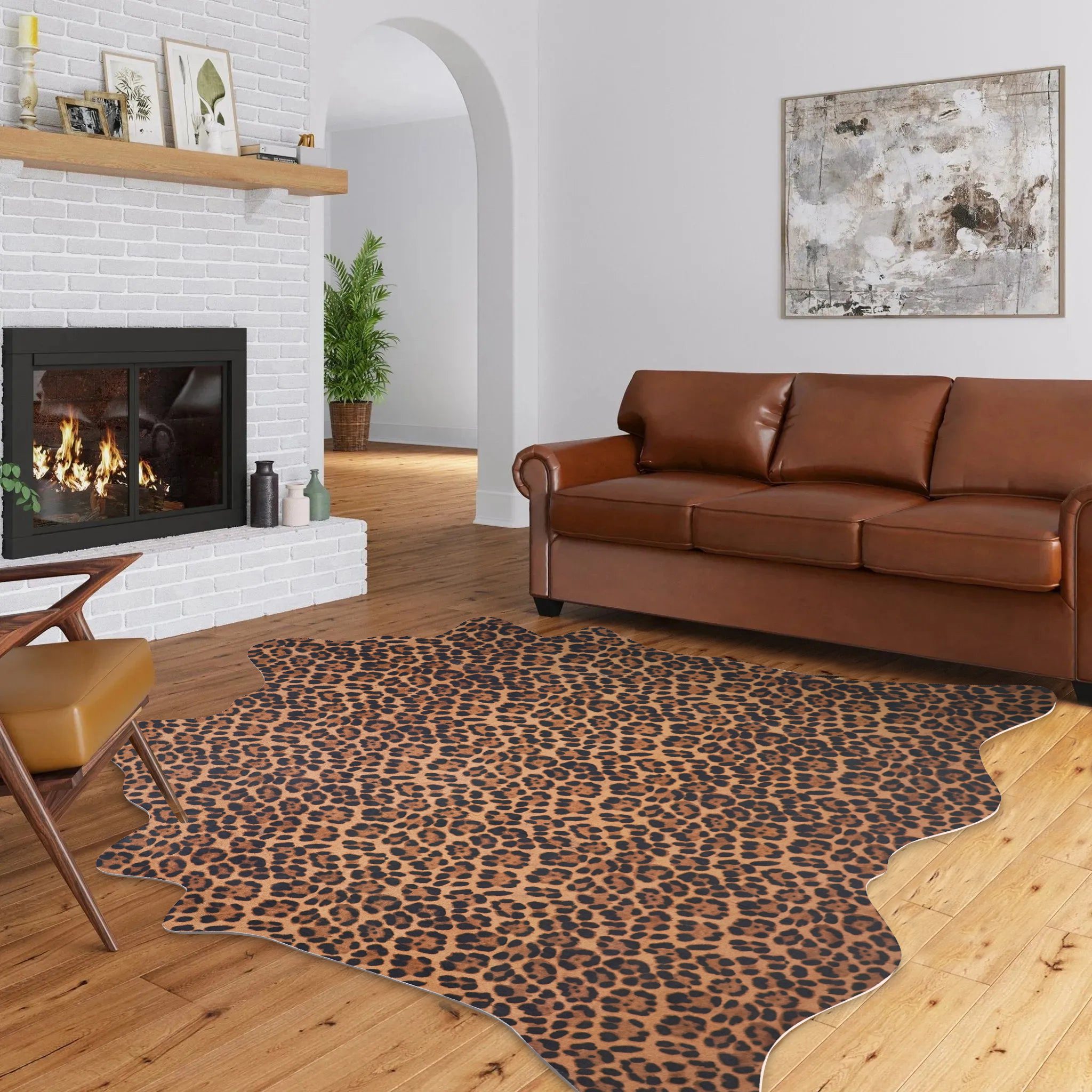
A cowhide rug with leopard print is a statement piece. The irregular, organic shape of the hide combined with the bold print makes it an instant eye-catcher. It adds both texture and wild elegance, striking the perfect balance between rustic and glamorous. Perfect for eclectic, boho, or modern interiors looking for an unexpected twist.
Synthetic Leopard Print Rugs:
These rugs tend to be more symmetrical, rectangular, or round in shape and often appear more polished or “fabric-like.” The pattern is usually repetitive and uniform. While stylish, they can sometimes look mass-produced or less luxurious, depending on quality.
3. Durability & Maintenance
Cowhide Rugs:
Cowhide is naturally tough. It resists wear and tear better than most synthetic options, making it a great choice for high-traffic areas like living rooms or entryways. It’s also naturally hypoallergenic, easy to spot clean, and doesn’t trap dust like high-pile rugs.
Regular Rugs:
Synthetic rugs vary in quality. While some are stain-resistant and machine-washable, others may wear down, fade, or pill over time. They may also trap more dust and allergens if they’re plush or shaggy.
4. Versatility in Styling
Leopard Cowhide Rugs work like magic in various decor themes:
Modern Minimalism: Add a leopard cowhide rug under a glass coffee table to inject pattern and texture into an otherwise sleek, monochrome space.
Boho Chic: Pair it with rattan furniture, macramé wall hangings, and indoor plants. The natural curves and wild print enhance that relaxed, earthy vibe.
Rustic Glam: Mix with dark leather furniture, gold accents, and wood for a luxurious lodge-inspired room.
Eclectic Interiors: Layer it over a jute rug or combine with other animal prints for a daring and curated look.
The irregular shape of cowhide also adds a natural flow to rooms — softening hard edges and creating visual movement.
While stylish, regular leopard print rugs tend to fit better in spaces with a more structured or coordinated aesthetic. They can feel more conventional and are often used in bedrooms, kids’ rooms, or traditional settings.
5. Price & Perception
Cowhide rugs, especially real ones, are seen as premium products and are usually more expensive than synthetic leopard rugs. But with higher price comes greater uniqueness, durability, and that touch of luxury. Faux cowhide rugs offer a more affordable option while still capturing the look.
On the other hand, regular leopard print rugs are available in a wide price range, from budget to high-end. However, unless made from premium materials, they are often perceived as more trendy or mass-market.
Ethical debates around animal-derived decor are discussed in depth byhttp://PETA’s sustainable living guide.
How to Style a Leopard Cowhide Rug: 5 Pro Tips
Let It Be the Star: Don’t clutter the room with too many competing prints. Let the cowhide shine against neutral tones or solid-colored furniture.
Contrast It: Place it on light wood floors or white tiles to make the dark spots pop. For extra contrast, place it under modern furniture for a bold juxtaposition.
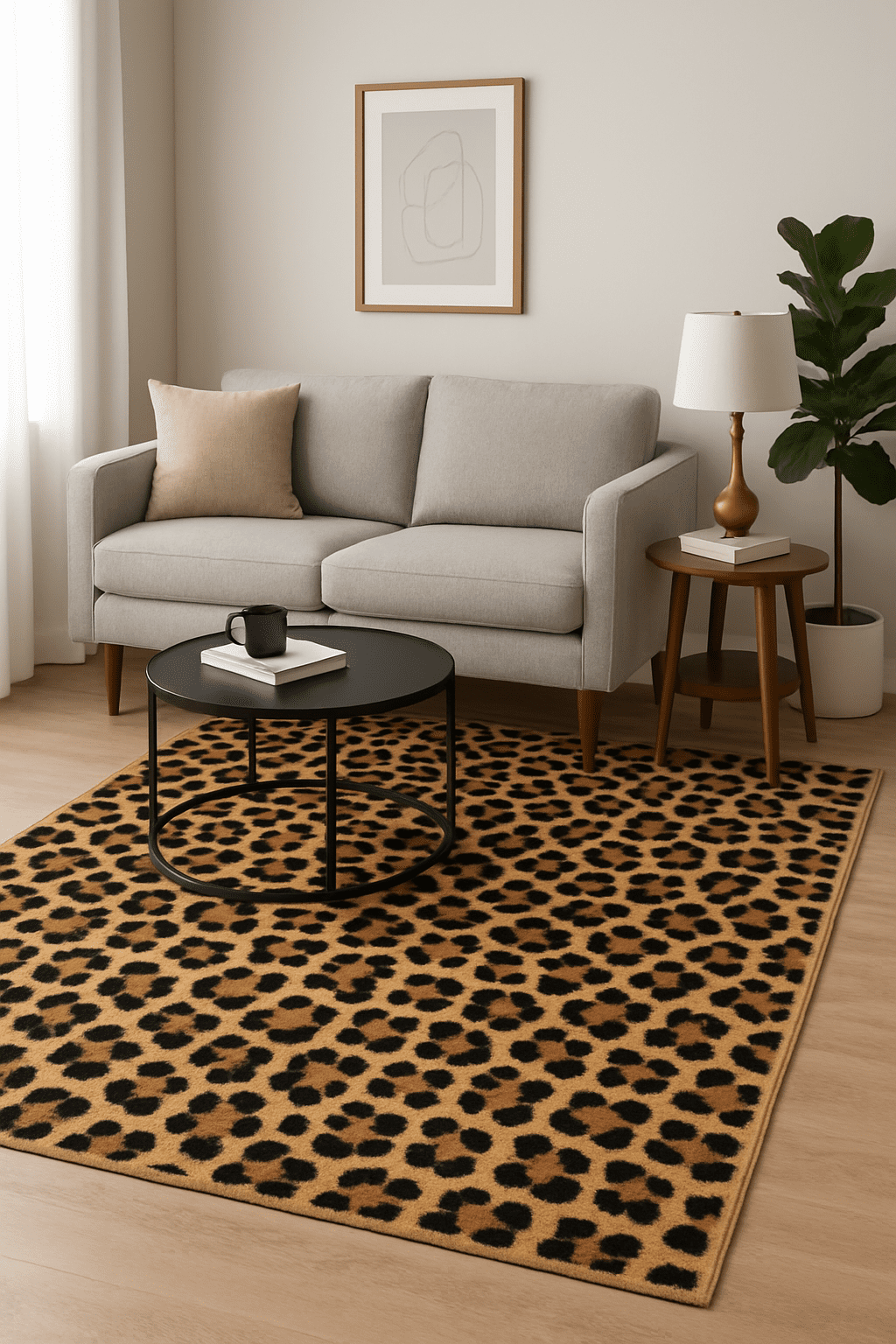
Layer for Depth: Layer over a larger jute, sisal, or solid rug to anchor the space and add dimensionality.
Play with Accents: Complement it with gold, brass, or black accents — think side tables, frames, or cushions — to bring out the glamour in the leopard print.
Go Asymmetrical: Don’t center the rug perfectly under furniture. Let one side drape freely or extend beyond the table edges for a more organic feel.