 Spanish
  English
  Japanese
  German
  French
  Dutch
Dutch  Portuguese

In a world where design meets technology, hyper-realistic faux cowhide textures have emerged as a game-changer in the interior decor industry. These rugs don’t just mimic real hide—they digitally replicate every freckle, vein, and nuance using high-definition techniques and advanced material engineering.
But how does a computer-generated pixel become a lifelike leather pattern? Let’s peel back the layers and discover the technology behind today’s most convincing faux cowhide rugs.
1. The Digital Blueprint: Designing with Precision
The journey starts with digital cowhide printing, where graphic designers use ultra-high-resolution scans of real cowhide to create digital blueprints. These aren’t just pretty pictures—they are data-rich texture maps containing information on grain depth, color gradients, and organic blemishes.
Designers use tools like Adobe Photoshop and CAD software to adjust contrast, clean up inconsistencies, and even enhance features that may be too subtle in the original hide. The result? A pattern so detailed it feels like you’re looking at the real thing—only cleaner and cruelty-free.
Did you know? Some faux cowhide designs use 4K texture scanning to replicate over 10 million pixels of hide detail.
2. Printing with Depth: Multi-Layer Ink Technology
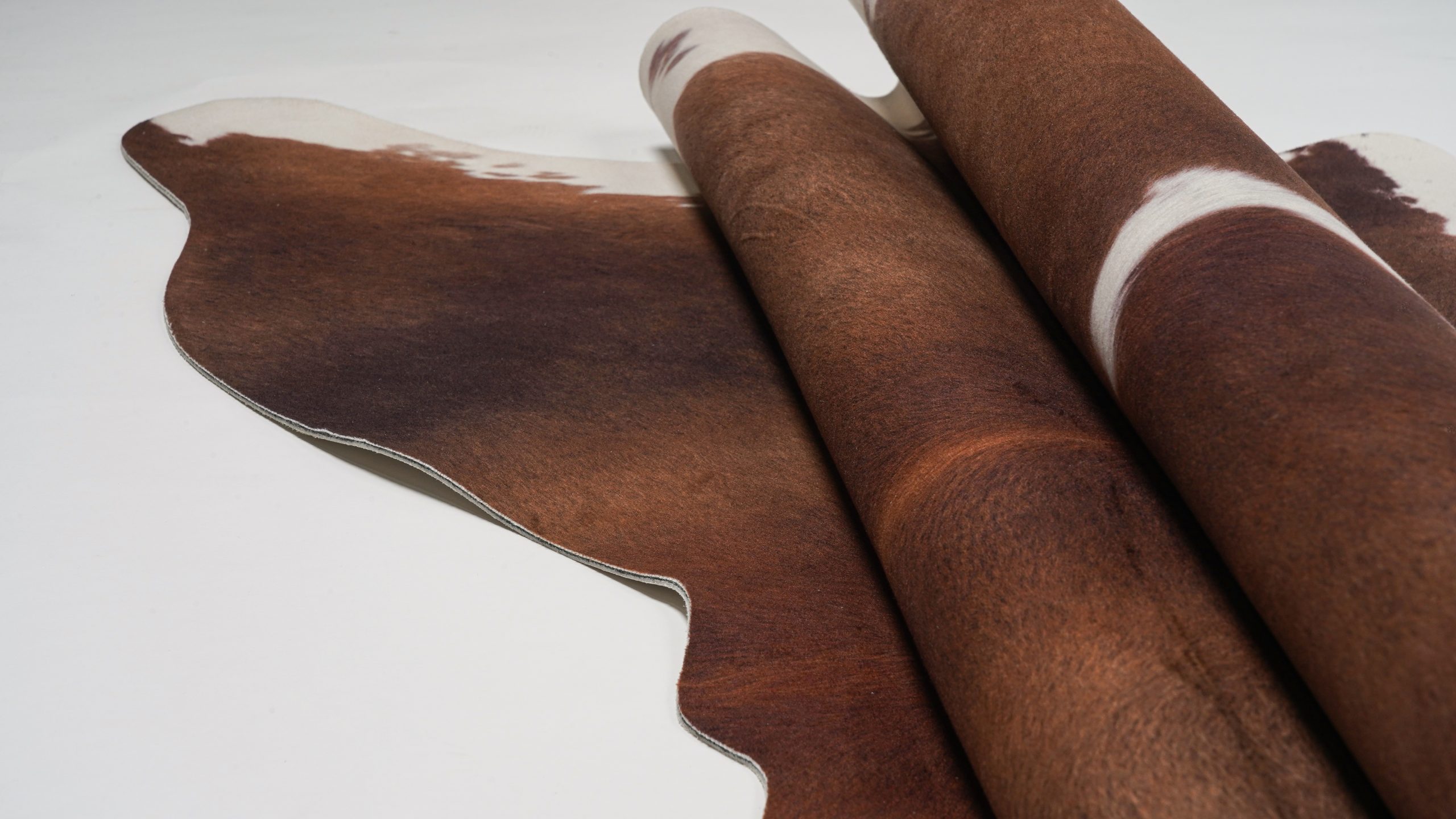
Once the pattern is finalized, the printing process begins. Unlike simple textile printing, this requires multi-layered ink application to simulate depth, texture, and the slight sheen you see on real cowhide.
Modern machines use eco-solvent or UV-cured inks, layering them with microscopic precision. This creates the illusion of real pores and grain while maintaining durability and water resistance.
For instance, Trotec Laser’s LaserLeather showcases how laser engraving and precision etching techniques are applied to synthetic surfaces. These technologies are instrumental in high-end faux leather texture fabrication, offering detailed engravings and fine laser cuts that enhance the realism of faux cowhide products.
3. Texture Meets Tactile: Embossing and Microfiber Backing
Visuals alone aren’t enough. For hyper-realistic faux cowhide textures to succeed, they must feel real. That’s where embossing and material layering come in.
Embossing plates apply slight pressure to imprint physical ridges and bumps into the surface, giving the material that familiar rugged yet supple cowhide feel. Underneath, a microfiber or felt backing is often added for both stability and a luxurious underfoot experience.
This is where synthetic cowhide design truly earns its place: not just mimicking looks but engaging multiple senses.
4. Eco-Conscious Engineering: Sustainable and Stylish
Unlike genuine cowhide, synthetic alternatives are often produced with low-impact materials and waterless printing technologies. Some faux cowhide rugs, like those on Cowkobe’s sustainable collection, even feature biodegradable backings and recyclable surfaces.
This not only appeals to the conscious consumer but also aligns with broader trends in slow living and eco-luxury interiors. By investing in faux leather innovation, you’re saying yes to style, no to animal harm, and yes to circular design.

5. Pattern Longevity: Fade-Resistant and Durable
One of the biggest concerns with printed textures is fading. Thankfully, modern cowhide pattern technology uses fade-resistant pigments and surface protectants. These coatings shield your rug from UV damage, foot traffic, and cleaning solvents.
Whether you’re placing your rug in a sunny living room or a cozy study, its hyper-realistic faux cowhide texture will maintain its vivid print and shape for years—unlike real hides, which can stretch, curl, or discolor.
6. The Final Touch: Cutting, Binding, and Custom Shapes
Once printed and embossed, the material is precision-cut into various shapes: classic cowhide contours, geometric cuts, or even custom silhouettes for brand or personal flair. Laser-cutting tools ensure zero fray edges, and stitched or heat-bound borders improve durability.
Want a statement piece for your modern farmhouse or boho-chic corner? Custom cuts let you turn art into accent with style and precision.
7. Why It Matters: Craft + Conscience + Customization

The beauty of hyper-realistic faux cowhide textures lies n
ot just in their appearance, but in their values. This isn’t just design—it’s design done right.
You’re not compromising on style or touch—you’re gaining a product that merges advanced imaging, sustainable materials, and craftsmanship worthy of the real thing. For interior designers and conscious homeowners, this is a texture that speaks louder than words.
If you’re interested in styling tips, outdoor applications or how faux cowhide can be incorporated into bohemian or safari-inspired interiors, check out other popular articles on our blog: https://cowkobe.com/category/interior-decoration/
From scanning real hides to printing 4K textures, the process of creating hyper-realistic faux cowhide textures blends technology, artistry, and ethics. It’s a journey from pixel to pattern that redefines what synthetic decor can offer—and proves that innovation has never looked so natural.
Ready to bring one home?